


Egg Donors
October 28, 2026 at 4:45:00 AM
The idea of helping someone build a family through egg donation can be exciting, but it’s also natural to have questions about what your body will go through. Is the egg donation painful? Will the injections hurt? What will you feel during recovery? These are important questions to ask before taking the next step.
At Growing Generations, we believe you deserve honest answers and a clear understanding of what to expect before making your decision. While egg donation involves some temporary discomfort, knowing what each stage feels like can help you approach the experience with greater confidence. Let's walk through the process, from your first screening appointment to recovery, so you can decide whether egg donation is right for you.
The Short Answer: What Most Donors Feel
Egg donation involves some discomfort, but most donors do not describe the entire process as painful. Most discomfort happens during the final days of ovarian stimulation and the first 24 to 48 hours after retrieval. You can typically expect:
Screening: Brief needle sticks for bloodwork and possible pressure during an ultrasound.
Daily injections: A quick pinch, sometimes followed by mild tenderness or bruising.
Ovarian stimulation: Bloating, pelvic fullness, period-like cramps and tiredness as your ovaries enlarge.
Egg retrieval: No pain during the procedure under sedation but possible grogginess afterward.
Recovery: Cramping, bloating or light spotting, usually improving over the following days.
These sensations are real, even when they are manageable and short-lived. Your IVF team monitors your response and adjusts your care when needed. Remember: everyone’s experience is different, so speak up if something feels more intense than expected.
The Egg Donation Cycle, Stage by Stage
At Growing Generations, you apply, create a profile, match with intended parents, complete screening and monitoring, take injections then receive a trigger shot, and finally, undergo retrieval. Egg retrieval usually happens three to five months after you’re matched, though the exact timing depends on how quickly intended parents choose you and where you are in your menstrual cycle.
Application, preliminary screenings and profile: Start-up documents, virtual consultation and profile completion (4-6 weeks)
Matching: Intended parents select a donor (timing varies)
Psychological and medical screening: Psychological evaluation is done virtually while medical screening is typically done at the intended parents’ clinic. (2-4 weeks)
Monitoring and hormone injections: Usually 10–12 days.
Trigger shot: Approximately 24-36 hours before the egg retrieval procedure.
Egg retrieval and recovery: A short procedure, followed by days of rest and gradual improvement.
Screening, Bloodwork and Monitoring Appointments
This stage is usually more inconvenient than painful. Screening includes medical and family history, blood draws, ultrasound exams and a psychological evaluation. Discomfort is generally similar to a routine physical exam. The psychological evaluation is a conversation about your expectations, decision-making and understanding of donation; it does not involve a painful medical procedure.
For a transvaginal ultrasound, a clinician uses a small ultrasound probe to obtain images of your ovaries and reproductive organs. You may experience some pressure or mild discomfort during the exam, but it should not be painful. If you have any concerns or would like additional explanation during the procedure, you can let the clinician know.
Once ovarian stimulation begins, you can expect frequent monitoring visits, often scheduled early in the morning. These appointments typically include transvaginal ultrasounds to monitor follicle growth and bloodwork to assess hormone levels. Fitting appointments around work, class, or daily routines can be the hardest part of this process.
The Hormone Injections: What They Actually Feel Like
Ovarian stimulation medications are typically administered as subcutaneous injections, meaning they are given just beneath the skin, usually in the abdomen, using a small, fine needle. You may feel a brief pinch or mild stinging sensation during the injection, and minor bruising, redness, or tenderness at the injection site can occur.
Most donors self-administer these injections for approximately 10 to 12 days after receiving instruction from their IVF clinic on how to prepare and administer each medication. Your clinic will also provide guidance on proper medication storage and safe disposal of used needles. If you feel nervous about giving yourself injections, don't hesitate to ask your clinic for additional training or support.
To help minimize discomfort, consider icing the injection site for about 30 seconds beforehand, rotating injection locations, and following your prescribed medication schedule carefully. Be sure to contact your clinic if you experience persistent redness, significant pain, or other concerning symptoms.
Ovarian Stimulation: Bloating, Cramping and Mood Changes
While the daily ovarian stimulation injections may seem like the most intimidating part of egg donation, many donors find that the effects of ovarian stimulation are more noticeable than the injections themselves. During this stage, hormone medications encourage your ovaries to develop multiple mature eggs. As the follicles grow, your ovaries enlarge, which can cause bloating, pelvic pressure, and mild cramping.
For many women, these egg donation side effects feel similar to a particularly uncomfortable premenstrual week. Common side effects of ovarian stimulation include:
Bloating and fullness: Your lower abdomen may feel swollen or tight, especially when sitting.
Mild cramping or pelvic pressure: A heavy, period-like sensation that may increase as retrieval approaches.
Breast tenderness: Sensitivity associated with changing hormone levels.
Fatigue or headaches: You may feel more tired than usual or develop mild headaches.
Mood changes: You may feel irritable, emotional, or more sensitive than usual.
These symptoms generally peak near retrieval and begin improving afterward. Your IVF clinic will closely monitor how your body responds to the medications throughout stimulation. While some discomfort is expected, you should always report symptoms that feel unusual.
The Trigger Shot
When your follicles are ready, your clinic will schedule a final trigger injection 24-36 hours before retrieval. It may fall late at night, and the exact hour matters because it determines the timing of egg retrieval. Depending on the medication prescribed and your clinic's protocol, the trigger injection may be administered either subcutaneously (just beneath the skin) or intramuscularly (deeper into a muscle).
Your clinic will provide detailed instructions, medication education, and training to ensure you feel comfortable administering all injections.
The Retrieval: What You Feel and What You Don't
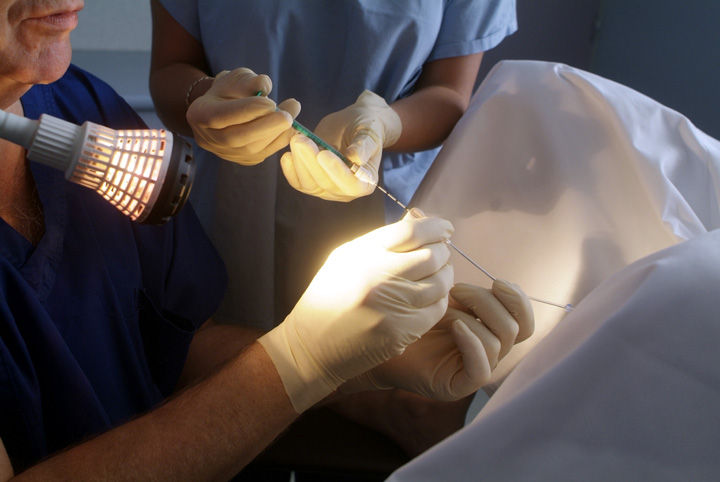
You should not feel pain during egg retrieval because the procedure is performed under sedation. The retrieval itself takes about 15 to 20 minutes, although timing varies.
Your doctor uses ultrasound to guide a thin needle through the vaginal wall into the ovarian follicles. Gentle suction collects the fluid containing the eggs; no abdominal incision is needed.
Your clinic may provide specific instructions regarding eating and drinking before the procedure, including whether fasting is required. Be sure to follow all pre-procedure instructions carefully. Your Case Specialist will help coordinate travel arrangements to and from the retrieval for both you and your authorized companion. Following the retrieval, you should plan to rest for the remainder of the day. As the sedation wears off, it is common to experience grogginess, mild cramping, abdominal pressure or bloating, and light spotting. You should not drive, consume alcohol, or make important decisions until the effects of sedation have fully resolved. For more details, read what to expect during egg retrieval.
Recovery: The First Week After Retrieval
Recovery after egg retrieval usually improves over several days, although ovaries stay enlarged longer. Rest at home on retrieval day. Cramps, bloating, spotting, and fatigue peak in the first 24 to 48 hours.
Time | What you might feel | What to avoid |
Retrieval day | Grogginess, cramps, spotting, and fullness | Driving, work, and strenuous activity |
Days 1 - 3 | Improving cramps, some persistent bloating | Heavy lifting, running, and twisting |
Days 4 - 7 | Usually less soreness, fullness may linger | Intense exercise and sex until cleared |
Week two | Continued improvement; period may return | Resuming workouts before clinic approval |
Avoid strenuous activity until your clinic clears you, often around your next period, typically 7 to 14 days after retrieval; timing varies. The arrival of your period often signals that hormone levels are settling, though your clinic decides when you can resume exercise. During this recovery period, avoid sexual intercourse to allow your body to heal and reduce the risk of discomfort or complications. Hydration, loose clothing, gentle walking, and clinic-approved pain relievers can help. Report any worsening discomfort.
See the full egg donor requirements.
What You Can and Can't Do During a Cycle
Lifestyle changes during egg donation are temporary and clinic-directed. Your schedule may still accommodate desk work and daily errands, but physically demanding jobs may require additional time off or modified duties. Plan for these restrictions:
Usually possible | What changes during the cycle |
Work or classes: Continue most ordinary activities around appointments. | Exercise: Avoid running, heavy lifting, jumping and twisting as your ovaries enlarge; wait for clearance after retrieval. Sex is restricted until cleared, too. |
Gentle walking: Often encouraged if comfortable. | Alcohol: Clinics typically ask you to avoid it during stimulation and recovery. |
Normal daily routines: Usually continue before retrieval day. | Smoking and recreational drugs: Not permitted under donor eligibility standards; avoid throughout the process. |
Local commitments: Often manageable with advance planning. | Travel: Keep your schedule flexible for frequent monitoring and retrieval; avoid travel that conflicts with clinic visits. |
Avoid unprotected sex during stimulation and until your clinic clears you: released eggs could result in an unintended multiple pregnancy. Some clinics restrict all intercourse while your ovaries remain enlarged. Many donors already use contraception, but your clinic will direct any changes before treatment. You can learn more about donating eggs while on birth control.
The Real Risks, and How Likely They Are
Serious medical complications are uncommon, although both the physical and emotional risks of egg donation deserve attention. According to the ASRM committee opinion on repeat oocyte donation, serious acute complications such as pelvic infection, internal bleeding or ovarian torsion occur in fewer than 0.5% of retrieval cycles.
Risks include reactions to sedation, bleeding, infection and ovarian torsion (an enlarged ovary twisting). Monitoring helps clinicians identify concerns but cannot eliminate every risk. The ACOG women's health resources also explain ovarian stimulation and its risks.
Ovarian Hyperstimulation Syndrome (OHSS)
Ovarian hyperstimulation syndrome (OHSS) occurs when the ovaries respond excessively to stimulation, swell and cause fluid to leak into the abdomen. Mild OHSS causes bloating, tenderness or nausea and often improves within a week. The Royal College of Obstetricians and Gynaecologists reports mild OHSS in up to 33% of IVF patients; that figure is not specific to egg donors. Ordinary bloating alone does not mean you have OHSS.
Severe OHSS may cause rapid swelling, vomiting, reduced urination or breathing difficulty and requires prompt treatment. ASRM reports severe OHSS in roughly 1% to 5% of egg donation retrieval cycles, with risks potentially lower under newer trigger protocols. Monitoring helps your clinic adjust medications to lower the risk. For more information, see Mayo Clinic on ovarian hyperstimulation syndrome.
The Emotional Side
Hormonal changes during ovarian stimulation may cause temporary mood swings, irritability, or heightened emotions, which typically ease as your hormone levels return to normal after retrieval. Some donors may also experience a range of emotions about their donation and the family they are helping to create. At Growing Generations, we encourage you to consider these feelings before applying so you can approach your decision with confidence and peace of mind.
When to Call Your Care Team
Some cramps are expected, but worsening symptoms need attention. Call your IVF clinic immediately for:
Severe or worsening abdominal pain
Heavy bleeding or a fever
Rapid weight gain or severe abdominal swelling
Persistent vomiting or markedly reduced urination
Difficulty breathing (seek emergency care)
Get your clinic's after-hours number before treatment. Seek emergency care if necessary.
When Egg Donation Isn't the Right Fit
Egg donation is not suitable for everyone. Growing Generations currently requires donors to be 21 to 29 years old, have a BMI below 27.5, be at least 5 feet tall, not use tobacco, have no history of substance abuse, and meet medical and genetic-health criteria. You can explore the ideal age range for egg donors and our egg donor requirements.
Certain factors may disqualify you from becoming an egg donor, including:
Age and BMI outside the required range
Height below the minimum requirement
Reproductive health concerns
Genetic or medical conditions
Smoking or substance abuse
Incomplete medical history
You must learn to self-inject for roughly two weeks. Needle anxiety isn't an automatic disqualification, but consider the self-injection commitment seriously. Early appointments and travel for retrieval require flexibility. You'll also sign a legal agreement.
Deciding Whether to Apply
Becoming an egg donor is a personal decision, and understanding what to expect can help you feel more confident about taking the next step. While egg donation involves some discomfort, most symptoms are temporary and manageable with proper medical care and preparation.
At Growing Generations, we believe every egg donor has the potential to make an extraordinary difference in someone's life. With personalized support throughout your journey, we're here to help you feel prepared and supported every step of the way.
Your journey starts with a simple application. Explore the possibility of becoming an egg donor and discover how you can help make someone's dream of having a family a reality.
Start Your Egg Donor Application
FAQs
Can egg donation cause long-term pain?
Long-term pain isn’t expected after a donation. Persistent pelvic pain warrants medical assessment rather than being dismissed as recovery.
Is the first period after egg retrieval more painful than usual?
Sometimes. The first period may bring stronger cramps or heavier bleeding, although others notice no difference. Tell your clinic about severe pain or unusually heavy bleeding.
Is pelvic pressure when walking or sitting normal during ovarian stimulation?
Yes. Enlarging ovaries can cause heaviness, especially late in stimulation. Sharp, one-sided or worsening pain needs prompt evaluation.
Will Donating Eggs Affect My Own Fertility Later?
Current evidence doesn't suggest reduced ovarian reserve, but long-term donor data are limited. The ASRM committee opinion on repeat oocyte donation discusses this uncertainty. Discuss your future fertility plans with your doctor.
Can egg donation cause back or pelvic pain?
Yes. Enlarged ovaries can cause pelvic aches extending into the lower back. Report sudden, severe or persistent pain.
Is it normal to feel sore several days after egg retrieval?
Yes. It's common to experience mild soreness or a sense of fullness for several days. However, increasing pain, fever, heavy bleeding, or marked swelling are not normal and need prompt medical attention.
Sources:
ASRM committee opinion on repeat oocyte donation: https://www.asrm.org/practice-guidance/practice-committee-documents/repetitive-oocyte-donation-a-committee-opinion-2020/
Mayo Clinic on ovarian hyperstimulation syndrome: https://www.mayoclinic.org/diseases-conditions/ovarian-hyperstimulation-syndrome-ohss/symptoms-causes/syc-20354697
ACOG women's health resources: https://www.acog.org
Related Posts


- Page 2